How to Work From Home Without Losing Focus: Build a System, Not Willpower
Why your attention leaks at home and how to structure a home workday so that real work gets done by evening instead of a pile of half-started tasks. Boundaries, rhythm, environment, and fixes for different situations.
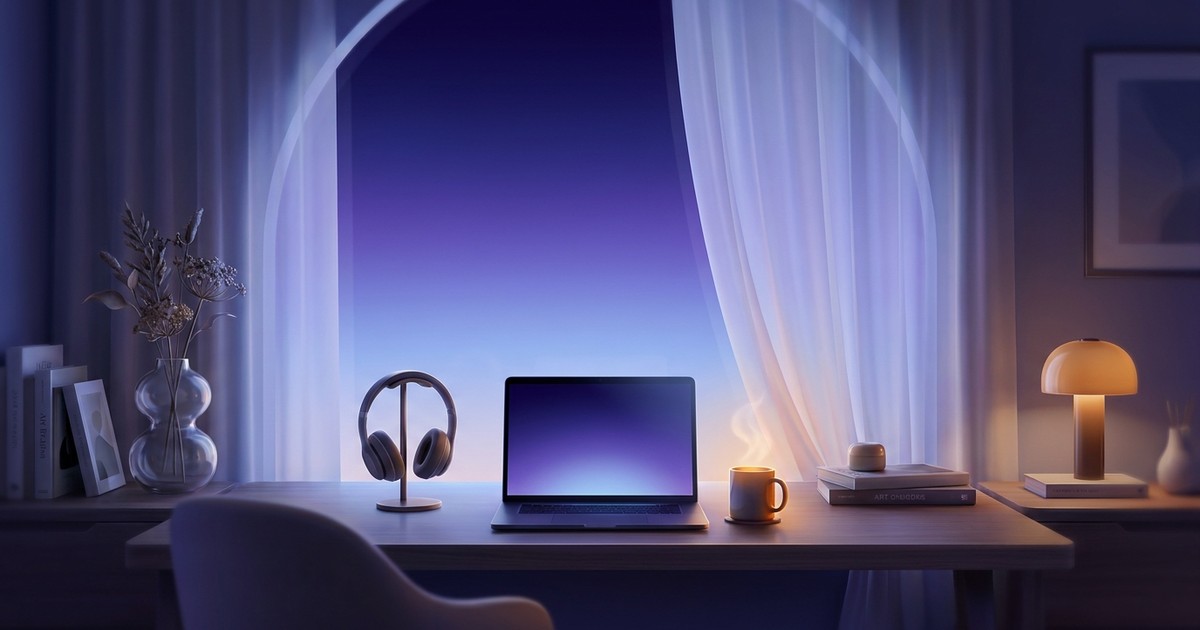
You sit down at nine, and by seven in the evening you catch yourself realizing you closed almost nothing. The day felt busy: email, a couple of calls, dishes in between, ten minutes of news that turned into an hour. Work seemed to happen, but there's no result. And the worst part is that you didn't rest either. You spent the whole day in that gray zone where you're not really working and not really living.
That's what "losing focus" at home feels like. Home erases the boundaries that the office held up for you automatically: the commute, other people's eyes, lunch at the same time every day, the moment you stood up and left. At home you have to build all of that by hand. The good news is you build it once, and after that it holds you on its own.
To work from home without losing focus, your home needs the boundaries the office used to provide for free: a spot used only for work, a clear start and end to the day, and one main task chosen in advance instead of a list of twenty items. In the morning, decide what has to be done by evening and give the first working hour to it, without opening email or chat. Work in blocks with short breaks instead of a vague all-day background hum. In the evening, close the day with a clear ritual, or work will drag into the night and rest never actually begins.
Why attention leaks at home when it held in the office
It isn't weak willpower. In the office the environment worked for you. You traveled to work, and the commute flipped you from "home" mode into "work" mode. People around you were working too, and that pulled you up without a single word. Lunch happened at roughly the same time, the workday ended, and you physically left the place where you worked.
At home none of those props exist. The same chair, the same room, in the morning, at noon, and at night. The bed is a few steps away. The fridge is even closer. Nobody can see whether you have a document open or a feed. Your brain gets zero signals that this is now work mode, so it honestly assumes you can do a bit of everything at once.
Which leads to the idea this whole article rests on: at home you can't rely on willpower, because it was never needed before. The surroundings did the work. So the surroundings have to be rebuilt, only now by you.
Place: work needs its own corner
The first thing that dissolves your day is working from the same spot where you eat, relax, and sleep. If the laptop lives on the kitchen table and you also eat lunch there, your brain can't tell whether this is a kitchen or an office right now. The place should tell your body what's happening.
You don't need a separate office. Even a small divider works:
- A separate desk, or at least a separate end of the table used only for work.
- A work chair, not the couch or the bed. Posture switches your mode as much as location does.
- Everything unrelated out of sight: dishes, laundry, things that shout "deal with me."
- Headphones as a signal that you're "at work," even at home, even with no music.
If your apartment is one room, a "one-meter move" helps: work only at the desk, and when you eat, rest, or scroll your phone, get up and do it in another corner, or at least in a different chair. The point is that work has its own place and also its own way out of it.
If space is tight, invent a short gesture that means "started." Pour coffee into the same mug, put on headphones, open one specific document. Thirty seconds, but your brain learns: this isn't just morning, this is the start of work.
Time boundaries: the day needs walls
It isn't only space that leaks, it's time. If the day doesn't start and end clearly, it spreads across all sixteen waking hours. You aren't working those sixteen hours, but you're never free of work for a single minute either.
Give the day two walls.
A start. Pick the time you sit down to work and keep it like a meeting with yourself. Not "whenever I wake up and warm up," but a specific time. Leave a small gap between waking and working that replaces the commute: a shower, breakfast, a short walk, anything, as long as it's a transition and not a seamless slide from bed into the work chat.
An end. This matters more than the start, and almost everyone skips it. Decide when the day closes, and close it. Without a clear end, work never stops: you're technically off, but the phone is right there, the chat is open, and at ten at night you answer a message "just in case." Your brain doesn't rest, because it never got the "done" command.
"I'll just finish this one thing" at eleven at night. You didn't rest all day because you felt guilty about open tasks, and you didn't really work because the whole day was unfocused. The result is neither work nor rest. The wall at the end of the day exists precisely to stop this.
One main task beats a long list
At home it's especially easy to swap work for motion. You did things all day: cleared email, replied in three chats, fixed small stuff, joined a call. By evening the list of closed items is long, but the thing that actually moves you forward isn't on it. Small tasks are always louder, because they're quick and pleasant.
The cure is one decision each morning: what has to be done today for the day to count as a success? Not twenty items, but one main task. Three at most. Everything else is allowed, but only after that one.
Then a simple rule kicks in, the one that saves the home workday best: give the first working hour to the main task. Not to email, not to chats, not to "let me quickly clear the small stuff first." Small stuff is endless, it will eat the first hour and then the whole day, and you'll never get to the important thing. While your head is fresh and the inbox hasn't started tugging at you yet, you do what matters. Everything else can honestly wait ninety minutes.
When the main task is done before lunch, the rest of the day feels light. Even if everything goes sideways later, the day isn't a write-off: the important thing is closed. That removes the evening guilt that was keeping you from resting.
Rhythm: work in blocks, not as an all-day hum
Eight hours straight in front of a screen works for nobody. At home it shows even more, because nothing switches you: no colleagues, no meetings, no natural pauses. You either burn out by noon or spread the effort so thin across the day that nothing gets done.
The simplest fix is to break work into blocks. The classic version is to work in stretches of about twenty-five minutes with short breaks between them, and after several blocks take a longer pause. The numbers aren't sacred, some people prefer forty-five minutes of work and fifteen of rest. What matters is the principle: work has a stretch with a beginning and an end, and rest has an edge too, so it doesn't spill into an hour.
A block does three things. It gives you permission to fully switch on, because you know a break is coming, and lasting twenty-five minutes is doable. It stops you from staring at the screen until your brain turns to mush. And it turns a blurry day into countable pieces you can see afterward: today I did six work blocks, not "I did something all day."
During a break, get up and leave the screen. Don't scroll a feed in the same chair, but stretch, get water, look out the window. The point of a break is a switch, not swapping one screen for another.
Home is full of distractions that look like nothing
A separate curse of home is that there are a million tiny errands here, each one a two-minute job on its own, but together they eat the day. Dishes. Laundry. A delivery. The cat. "Since I'm up anyway, I'll wipe the counter." Each feels innocent, so you don't defend against them the way you'd defend against an hour of social media.
The rule is simple: household chores don't wedge into work blocks. You see the dishes have piled up, you don't rush to wash them. Write it on the list and come back to it during a break or after work. Breaking a work block costs more than it seems: after every switch you need several minutes to get back into the task. Three "quick" distractions turn thirty minutes of work into ninety.
About the phone specifically. At home it's the most dangerous, because there are no colleagues to feel awkward in front of. The most honest trick is to take it out of the room for the duration of a work block. Not in your pocket, not face down, but physically somewhere else. Distance beats willpower: you have to stand up and walk to the phone, and that one second is often enough to change your mind.
Keep a sheet or a note called "do later" next to you. Anything that surfaces during work, wash the mug, text a friend, order pet food, drop it there in one line and return to the task. Your head calms down because the thought is written and won't get lost, and the block doesn't break.
Who struggles most at home, and what to do
Universal advice is thin. Here's the breakdown by situation, because "I work from home" looks different for everyone.
If you don't live alone
The people you live with can't see the boundaries of your work unless you show them. To them you're simply home, therefore available. What helps here isn't willpower but an agreement: say plainly which hours you work and that during those hours you'd rather not be bothered with small things. Headphones or a closed door as a visible "not now" work better than explaining in words every time.
If you have kids
Honestly: focusing fully with a small child nearby is nearly impossible, and you shouldn't blame yourself for it. What actually works isn't willpower but the pockets of time you do have: the early morning before everyone's up, nap time, hours when someone can help. Hang the hard main task on exactly those windows, and leave the choppy rest of the day for small stuff you don't mind interrupting.
If you work in a stream of incoming messages
Support, sales, any job where messages and requests pour in all day turns into a nightmare at home: you never leave reaction mode. What saves you is splitting the day into two modes. There are windows when you answer incoming messages, and windows when the messengers are closed and you do your own work. Answering everything the same second is almost never necessary, and the habit of doing it is the main reason the day leaks.
If you find it hard to hold attention
For people whose attention jumps on its own, home is doubly hard, because there's no external frame. Short blocks and very concrete tasks matter especially here. Not "work on the project," but "write the first paragraph of the email." The smaller and clearer the step, the easier it is to start. And a distraction-free environment isn't a luxury here but a necessity: a cleared desk, phone in another room, one open document instead of twenty tabs.
How this fits with planning and habits
Working from home isn't a separate skill, it sits on top of the usual methods, they're just needed more at home.
With a day plan it works like this: the night before or in the morning you pick the main task and roughly lay out which blocks handle what. At home you can't skip this, because there's no external schedule arranging things for you.
With habits the link is direct: the start of work, the breaks, the end of the day lock in fastest as a habit tied to a time or an action. For the first couple of weeks you'll hold it consciously, then home starts prompting you: sat at the desk, put on headphones, means we're working.
With a to-do list the key is not to confuse motion with work. The list is there to dump everything out of your head, but priority is set separately: one main task on top, small stuff below and strictly after.
Common mistakes, unpacked
Almost everyone who moves to working from home steps on these rakes.
Working in bed or on the couch. It feels comfortable, but the body never switches into work mode, and within half an hour you're tempted to lie down. A place for relaxing won't become a place for focus, no matter how hard you try.
Not getting dressed, staying in what you slept in. A small thing, but changing clothes is another transition signal. It doesn't have to be a dress shirt, but getting out of pajamas helps. It's about your head, not a dress code.
Starting the day with email and chats. It feels like you'll quickly clear the inbox and free your mind. In reality you hand the freshest hour to other people's tasks and spend the rest of the day reacting instead of acting.
Skipping breaks to "finish faster." It works the exact opposite way. Without pauses attention drops, mistakes multiply, and the same work takes longer. A break doesn't steal time, it gives it back.
Not closing the day. The most common and most expensive mistake. Without a clear end you never really rest, you stack up fatigue, and a month or two later you meet burnout. The wall at the end of the day isn't a luxury, it's protection.
When working from home just doesn't work
Honestly: home doesn't suit everyone or every task. If you realize that nothing at home holds you and no boundaries help, that's not a verdict on you, it's a signal that you need an external environment. Some people genuinely need people around and a physical change of place. Then a workspace outside home, a coworking spot or even a cafe for a couple of hours, solves more than any technique.
Just as honestly about truly demanding work: if a task needs several hours of complete silence and concentration, and home can't provide that, don't force yourself. Sometimes it's smarter to take exactly those tasks somewhere you definitely won't be interrupted, and leave at home everything that survives interruptions.
The point isn't to force yourself to work at home at any cost. The point is to figure out honestly what actually lets you focus and build the day around that.
Frequently asked questions
Where do I even start if everything at home blurs together?
Start with two things: carve out one spot used only for work, and give the day an end, a time when you close. These are the two cheapest boundaries to set up and they deliver the most. You can build the rest later.
Do I have to work by a timer in blocks?
Not strictly by tomatoes, but some rhythm with breaks helps almost everyone. Nobody survives eight straight hours, and at home there are no colleagues or meetings to switch you on their own. Tune the block length to yourself: twenty-five minutes, forty-five, an hour.
How do I stop grabbing my phone every five minutes?
Don't force it, remove it. Take the phone to another room for the duration of a work block. Distance beats willpower: you have to stand up and walk to it, and that second is usually enough to change your mind. Willpower loses over distance every time.
What if I have kids and focusing is impossible?
Don't blame yourself, and work in windows. Hang the hard stuff on the quiet pockets: early morning, nap time, hours with help. Leave the choppy part of the day for small tasks you don't mind interrupting. Trying to do deep work over the noise of kids is a straight road to guilt and exhaustion.
How do I explain to my household that I'm working, not just home?
Agree in advance and show it with a visible sign. Say plainly which hours you'd rather not be bothered with small things, and let a closed door or headphones mean "not now." To the people you live with, you're available by default until you mark the boundary yourself.
Is working from home in pajamas really that bad?
It's not fatal by itself, but changing clothes is another signal of switching into work mode, like the commute to the office. You don't have to put on a dress shirt, just getting out of what you slept in is enough. It affects your head, not how you look.
What if it just doesn't work for me at home, am I a failure?
No. Home doesn't suit everyone or every task, and that's normal. Some people need people around and a physical change of place to switch on. Then a coworking spot or a cafe for a couple of hours is more honest than forcing yourself at home for months and blaming yourself for it not working.
All of this is easier when you can see the day in front of you. Do It Today is built for exactly that: in the morning you set one to three main tasks with clear states, start the focus timer for a work block, and the app counts how many blocks you did that day and that week. Recurring tasks and habits help lock in the start and end of the day, and the history of past days honestly shows where you worked and where you drifted. It's free, installs on your phone, syncs across devices, and comes in light and dark themes. Home won't set the boundaries for you, but with the day in front of your eyes they're easier to hold on your own.
Try it right now
Tasks, a focus timer and habits on one screen. Open it and you instantly see what to work on.
Start for free
Marketer and online school founder. Runs his own day in this tracker – which is where the three-state tasks, the focus timer and the day history came from.